The Nintendo Game “Ice Hockey” where we had to build a team balancing three types of players
“A priest once told Howe that you can have two of three things and here they are: hockey, social life, or education”
I am in a lucky position as my children, who recently entered their teen years are involved in a multitude of sports. Individual sports such as golf and tennis, and team sports which include hockey and basketball. From experience playing youth sports, I tend to understand the athlete side, and how sports can play a positive role in childhood. Emphasis on physical fitness, a demand to keep up with academics to stay eligible to play sports, learning the role of hard work and perseverance are but of few of the many outcomes. As a parent of athletes, and as a youth hockey coach, I am still learning about youth sports, but from a new perspective. What I found over the last decade is that youth sports require several balancing acts. Having served as an assistant coach for my son’s 14U team this past year I experienced several balances, or tradeoffs I found worth exploring more through writing about them. In the spirit of a previous essay I wrote on the balancing acts of strategy, I offer the balancing acts of youth hockey.
The Iron Triangle: Former Deputy Secretary of Defense Dr. Kathleen Hicks often wrote of the “Iron Triangle of Painful Tradeoffs.” These tradeoffs included 1) readiness 2) force structure and 3) modernization. At any given time you can have two of the three. The hockey version of the Iron Triangle presents itself as 1) winning 2) development and 3) fun. At any given time, you can have two of the three. Winning is fun and can come at the cost of development. Winning and development may come at the cost of fun (see the 2001-2019 New England Patriots), and development and fun may come at the cost of winning. There is no right answer, but a coach must look to find a way to include elements of all three through the long season that defines youth hockey.
Balancing Talent: In youth team sports, most teams have a wide range of talent on the roster. In hockey, successful teams do not rely on one strong line followed by weak lines. Coaches can not just put the top talent on one shift which puts risk to other lines and shifts with weaker players. While most teams tend to have a top line, coaches must find ways to mitigate risk for the bottom lines, and sometimes that means less play, or bumping a more talented player to double shift with the 3rd or 4th line. Teams with strong first lines and weak second lines will often find themselves with scoring chances and puck possession only when the top lines are on the ice and chasing the puck in the defensive zone when weaker lines are on the ice. This is not a sustainable course of action.
Players have different skill sets. At higher levels, there are players who want the puck all the time (Sidney Crosby), and players who want the puck at the right time (Alex Ovechkin or Brett Hull). Putting two players on the ice who want the puck all the time, even if they are the two most skilled players on the team, means one of them won’t be as productive had they been on another line, even if it’s the second or third line. Balancing lines means balancing the right skill sets, not leveling out the talent.
Balancing Creativity and Systems: Most coaches use specific defensive and offensive systems for their hockey teams. Offensive systems such as the 1-2-2, or 2-1-2, and defensive systems such as neutral zone trap. Breakouts and odd-man rushes often have set ways or routes that skaters use to advance the puck up the ice. At lower levels of hockey teams often have a system that the entire team employs, while at higher levels teams rotate which system or concept to employ dependent on who is on the ice and the current game situation.
We often think of creativity in hockey as an individual skater stickhandling around a defenseman, or a forward playing for Michigan scooping up the puck an carefully placing it top shelf from behind the net. The true zen of creativity however is five skaters on the ice being creative together. Collective creativity on the ice was the innovation of Anatoli Tarasov. This is where the Soviets excelled in their long-term dominance of international hockey. Tarasov, in his book Road to the Olympus described his philosophy of involving defenseman in the offense, a standard tactic in today’s game.
Balancing Size: Children develop mentally and physically at different rates. This compounds in youth hockey when considering that an 11-month difference in age can mean a vast difference in size, intellect, and maturity. Throwing a line of small kids against a line of large kids can be a recipe for disaster, and that disaster may mean goals against or a kid getting punished in the boards and sustaining an injury. Each player on each line should have a specific role which may include winning puck battles on the boards and in the corners, or carrying the puck, and having a larger player balance a smaller player on a line can help better identify who is in what role.
It is at the bantam level that size and speed tend to even out. Big kids get fast, small kids get strong. The key is the ability to evaluate size and speed in the proper context. Pure speed up and down the ice is not the same as speed in gaining and advantage over an opposing player, nor is it the same as speed in closing a gap. Indeed, speed of recognizing patterns and decision making can influence how fast a player gets to the puck, or to the right position in the open ice. Size can be used in different contexts from creating a screen in front of a goalie and fighting for the rebound to size and strength clearing out your own crease.
Balancing Development and Winning: The purpose of youth sports is to develop kids as people, and to prepare them for higher levels of the sport they play. Youth sports first and foremost should have the aim of making the athletes better people. Development will always trump winning; however, coaches must still find a way to win games. Teams that consistently lose tend to have internal chemistry problems, as the sport becomes less fun for the athletes involved, and thus less fun for the parents of said athletes. We want kids engaged in the sport, but they can rapidly become distant if they think their hard work won’t pay off, either in playing time or in victories.
It's ok to lose in youth sports. Indeed, if you’re reflective, you can learn more when losing than winning (but you should be reflective and learn no matter the outcome). Indeed, when the 1980 U.S. Olympic Hockey Team lost to the Soviets 10-3, shortly before the official start of the Lake Placid Games, the loss provided the team with experience playing at the Soviet’s pace and helped Herb Brooks develop his game plan for Lake Placid (The movie Miracle depicts the loss as demoralizing, when in reality it was part of Brooks’ plan). Losing can often provide an athlete with motivation to work harder, and to invest in developing the physical and intellectual skills of their sport.
Balancing Ice Time: There is a balance that goes into how much ice time each individual player and line see during a game that is related to albeit separate from the balance of development and winning. Fred Shero, former head coach of the Philadelphia Flyers in the mid-1970s (the famous “Broad Street Bullies”) and winner of to Stanley Cups emphasized the necessity to get more playing time to the lesser skilled players and lower lines early in the season so they could better learn his systems and build up their collective strength for later in the season and for the playoff run. Moreover, Shero’s concept ensured that a less skilled player could fill in for a more skilled player when injuries arose throughout the season. The cost of this concept was more games lost at the start of the season. NHL teams play 82-regular season games, so there is more room for early losses than youth or even college hockey whose league games could be limited to 25-30 games.[i]
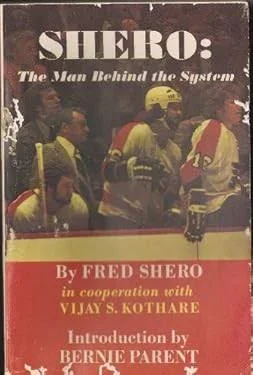
Fred Shero’s book offers many insights into his coaching philosophy
Former NHL Coach and Stanley Cup Champion Mike Keenan broke down how he thought about lines and ice time when coaching at the 1987 Canada Cup. In this tournament, team Canada had a roster full of superstars, and some players who normally saw the most ice for their NHL team found themselves on the 4th line of team Canada. I will break down his concept, and “hockey math” for the youth level.
Hockey game = 3 x 15 minute periods, = 45 minutes of game time.
There are 5 x skaters on the ice. 5(45) = 225 minutes of ice time to divey up.
If each line played the same amount of time, each player gets 15 minutes.
But first line players might get ~20 minutes each, second line 15 minutes, third line 10 minutes.
Subtract 1:30 of total time for each penalty we take. For example, we take 4 penalties, we no longer have 225 minutes to share, we have 219 minutes.
Gets harder with 4 lines, and at higher levels top players will see more ice (a top NHL defenseman may get 26-30 minutes per game, a forward 25 minutes or so).
There are ways coaches can get top lines more ice time. For example first and last shift for each period go to the top line. In the NHL, coaches know when TV timeouts occur, and put out the first line just before TV timeouts and immediately afterwards, creating a double shift.
Keenan’s hockey math resulted in Team Canada winning the Canada Cup, Wayne Gretzky getting ~25-27 minutes a night while Theo Fleury saw about 6-7 minutes a game.
Balancing Individual Skills and Team Tactics: In youth hockey, practice is where most development of an athlete occurs. Indeed, my advice to parents is that if they must miss ice time, it is better to miss a game than practice where their kid will have more time on the ice, more time with the puck, make more passes, receive more passes, take more shots, and for goalies to make more saves. Practices of course must develop and enhance individual skills but also take time to review and rehearse team tactics in a methodical manner.
Eventually, everyone reaches a level of hockey where everyone else on the ice is just as good, if not better. I see this aspect play out in Pee-Wee and Bantam when the big kids get fast and the smaller kids get strong. Players who relied on size or speed early in their hockey development are forced to develop more skills or create more arrows to place in their quiver.
Hockey, like football, is a game of situations. There is situational football and situational hockey. Hockey situations can range from the mundane defensive zone faceoff to the wild endings when a team pulls a goalie for a 6-5 skater advantage. Teams that practice and know what to do in each situation tend to win more games than teams that play firewagon hockey.
Balancing Opponents: Nobody enjoys losing every game, and in a sense very few people enjoy winning every game or match by lopsided scores. In the latter, there is very little development occurring when the competition isn’t close. There is a theory that 25% of games should be against slightly lesser opponents, which helps to refine skills and build confidence, 50% against evenly matched opponents to maintain a steady level of intense competition, and 25% against higher rated opponents to test the development and to learn what it takes to attain or reach higher levels of the sport.
Balancing Today and Tomorrow: Current skills and abilities today don’t always match the skills and abilities a player will have tomorrow. Indeed, when looking at youth hockey players coaches must look into the future and see a player’s potential. This balance circles back to the development and winning balance. Coaches must allow players to make mistakes, or to play against opposing lines who have more size and talent, thus allowing for failure in the short term with the objective of longer-term success. This is true in any sport.
Hockey, like life is about a series of tradeoffs. Building and developing a team means making decisions and carefully calibrating which side of each balance to weigh more heavily throughout a season. There is no prescription on the proper method, and as I often tell my students at War College, “there are no right answers, but there are wrong answers.”
[i] Fred Shero is an underrated hockey innovator. Following a trip to the Soviet Union in 1974 as part of a study group from Loyola ,he became the first coach to really take lessons learned from the Soviet Hockey System and apply them to a NHL team. Concepts such as rolling lines, quick shifts, fast counterattacks in lieu of starting the break-out from behind one’s own net and creating openings for the right shot and best scoring chance rather then just shooting at any opportunity.